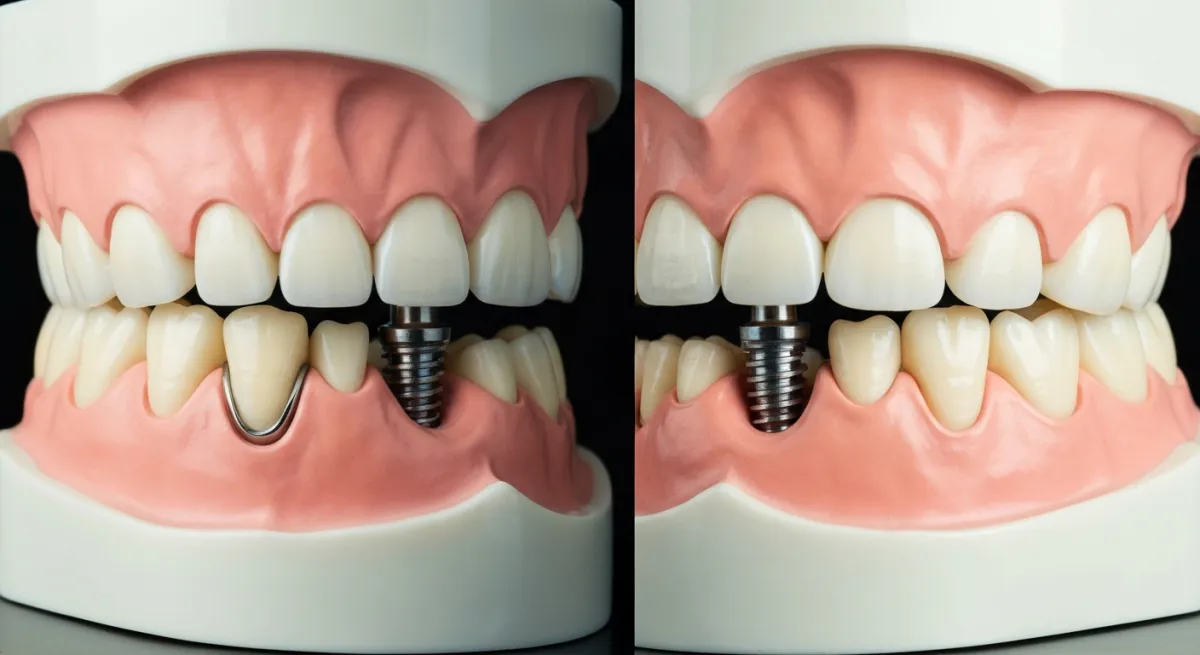
You have lost a tooth and your dentist says you can either get a dental implant or a bridge. Both replace the missing tooth, but they work very differently — and the cost, durability, and long-term impact on your oral health are not the same. Choosing wrong can cost you more money, more teeth, and more visits in the long run.
This guide is a definitive comparison to help you make the right decision, written by Dr. Sumukh M, MDS Oral & Maxillofacial Surgeon and FICOI (USA), who places both implants and bridges every day at Samhita Dental in Basaveshwaranagar, Bangalore.
What Is a Single Tooth Dental Implant?
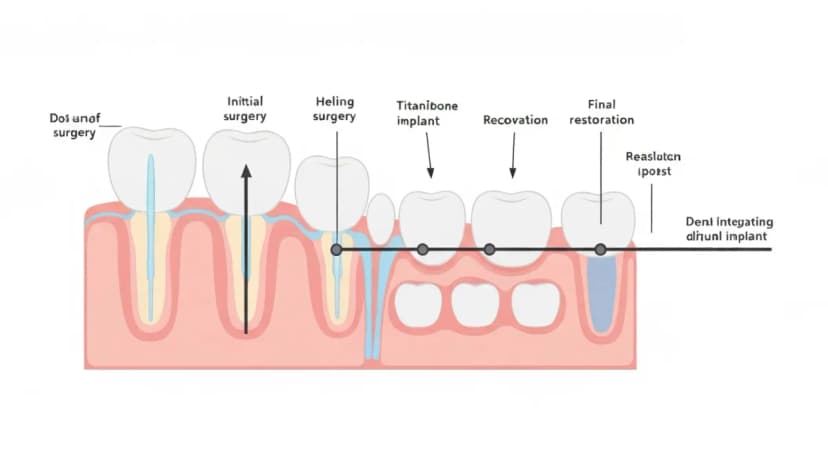
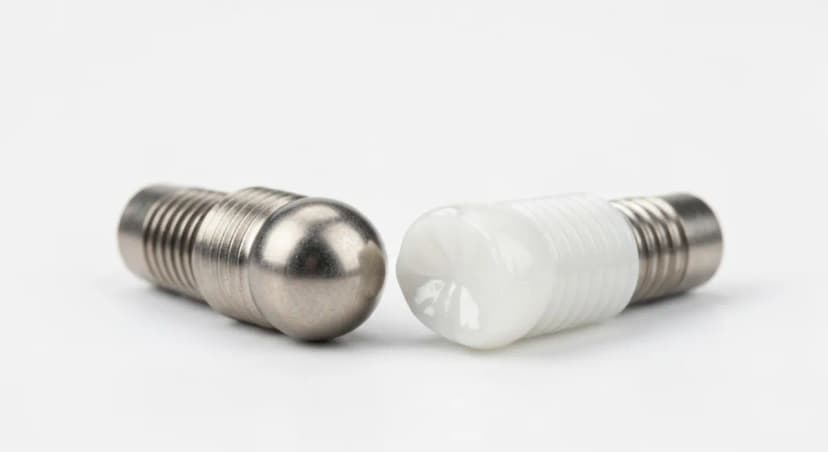
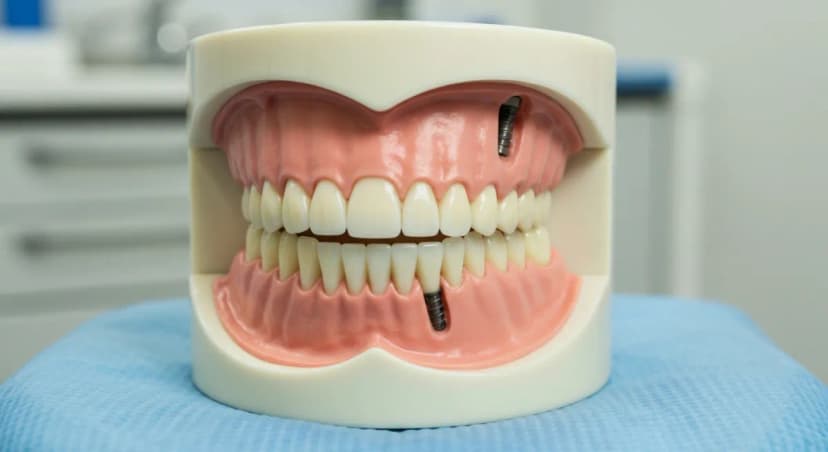
A dental implant is a titanium or zirconia screw placed directly into the jawbone, acting as an artificial tooth root. It is topped with an abutment and a crown to create a standalone replacement tooth that does not touch or affect adjacent teeth. The procedure typically takes 2-3 appointments over 3-6 months, including healing time. Same-day implants are available at select clinics like Samhita Dental for suitable cases. Dental implants have a 98% success rate.
What Is a Dental Bridge?
A dental bridge is a prosthetic tooth (called a pontic) held in place by crowns cemented onto the two healthy teeth on either side of the gap. This means the adjacent teeth must be ground down — permanently removing healthy enamel — to support the bridge. The procedure requires 2 appointments over 1-2 weeks and involves no surgery. Bridges have a success rate of 90-95% over 10 years.
Implant vs Bridge — Complete Comparison
Cost Comparison
Single tooth implant: INR 18,000 – 45,000 (one-time investment)
3-unit dental bridge: INR 5,000 – 15,000 (needs replacement every 5-10 years)
While a bridge costs less upfront, consider the long-term picture. Over 20 years, one implant costs less than 2-3 bridge replacements. Each bridge replacement also requires re-preparation of the supporting teeth, which weakens them further over time.
Durability and Lifespan
An implant screw can potentially last a lifetime. The crown on top typically lasts 10-15 years. A bridge averages 5-10 years, sometimes 15 years with excellent care. Unlike bridges, implants are made of titanium or zirconia and cannot decay.
Impact on Adjacent Teeth
This is the single biggest clinical advantage of implants. A dental implant is completely standalone — it does not touch or affect neighbouring teeth. A bridge requires permanently removing enamel from two healthy teeth to support the prosthetic. If the bridge fails later, those supporting teeth may be compromised, potentially leading to the need for more implants or bridges.
Bone Health and Preservation
A dental implant stimulates the jawbone just like a natural tooth root, preventing bone loss in the area. A bridge does nothing for the bone beneath the missing tooth — bone resorption continues unchecked. Over years, bone loss under a bridge can change your facial appearance, creating a sunken look.
Aesthetics and Natural Look
An implant looks and feels like a natural tooth — it emerges individually from the gum. A bridge can look natural initially, but the connected structure may become noticeable at the gumline over time, especially as bone resorption occurs. For front teeth, implants generally produce a more natural result.
Procedure and Recovery
Implant: Minor surgery under local anaesthesia, 3-6 month healing period, 2-3 visits total.
Bridge: No surgery, completed in 1-2 weeks, 2 visits.
If speed is your priority, a bridge is faster. But the few extra months for an implant result in a far more durable outcome.
Maintenance and Cleaning
An implant is brushed and flossed like a natural tooth — nothing special is required. A bridge requires special floss threaders or interdental brushes to clean beneath the pontic. Neglecting bridge cleaning leads to decay of the supporting teeth and eventual bridge failure.
When Should You Choose an Implant?
An implant is typically the better choice when you are between 30 and 50 years old and want a long-lasting solution, when the adjacent teeth are healthy and grinding them for a bridge would be destructive, when you want to prevent bone loss in the jaw, when the missing tooth is in the front where aesthetics matter most, when you want minimal long-term maintenance, and when you can afford the upfront cost or use EMI payment plans.
When Should You Choose a Bridge?
A bridge may be the better option when the adjacent teeth already have large fillings or crowns (grinding them is less of a sacrifice), when you need the replacement within 1-2 weeks, when a medical condition prevents implant surgery such as uncontrolled diabetes, when budget is the primary constraint and EMI is not an option, when you are elderly and prefer to avoid surgical procedures, or when there is insufficient bone for an implant and you do not want bone grafting.
Can You Replace a Bridge with an Implant Later?
Yes, it is possible, but it depends on the bone condition at the time. The longer you wait, the more bone loss may have occurred under the bridge. If bone has deteriorated significantly, bone grafting will be needed first, adding cost and time to the process. It is generally better to choose an implant from the start if it is clinically suitable for your case.
What About Front Teeth — Implant or Bridge?
Front teeth are the most visible part of your smile, making aesthetics paramount. Implants look more natural because they emerge individually from the gum, while bridges can show a connected line or receded gum over time. However, front tooth implant placement requires high precision in what dentists call the aesthetic zone. This is where surgeon expertise matters most — Dr. Sumukh's computer-guided implant placement at Samhita Dental ensures precise positioning for the best aesthetic result. Zirconia crowns on implants provide the most natural look for front teeth.
Cost of Single Tooth Implant vs Bridge in Bangalore
Single implant at Samhita Dental: from INR 36,000 (depends on brand and crown material)
3-unit bridge: INR 5,000 – 15,000 (depends on crown material)
The break-even point comes after approximately two bridge replacements — around 10-15 years. At that point, the total cost of bridges exceeds the one-time cost of an implant. Factor in the hidden costs of bridges: if the supporting teeth develop decay or fractures, additional treatments add up significantly.
Why Choose Samhita Dental for Your Tooth Replacement?
Dr. Sumukh M holds an MDS in Oral & Maxillofacial Surgery and FICOI (USA), backed by 15+ years of experience and 500+ workshops conducted for fellow dentists. At Samhita Dental, you benefit from computer-guided implant placement for precision, same-day implant options, transparent pricing from INR 36,000 per implant, in-house OPG and digital X-ray diagnostics, EMI payment plans, and a 98% implant success rate.
We are located in Basaveshwaranagar, Bangalore, open 10 AM to 8 PM, Monday to Saturday. Book your free consultation to find out whether an implant or bridge is right for you. Call 7483578147.