
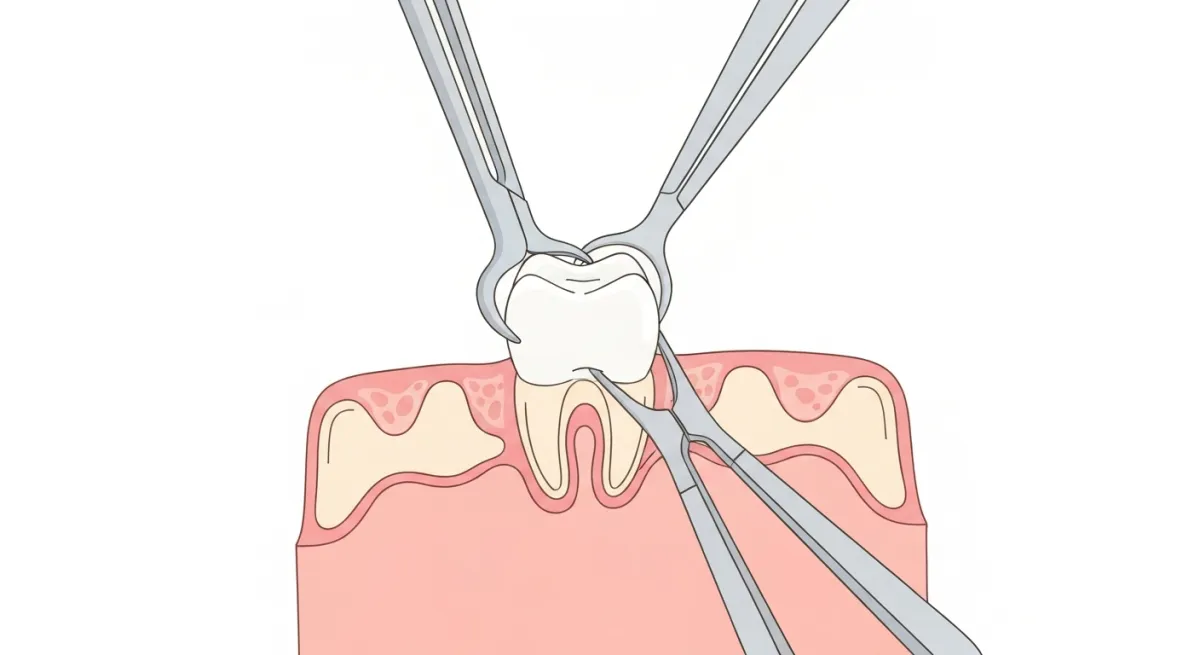
Why Choose an MDS Oral Surgeon for Your Tooth Extraction
Tooth extraction, especially surgical extraction and wisdom tooth removal, is a surgical procedure — it should ideally be performed by a trained oral surgeon.
Dr. Sumukh M holds an MDS (Master of Dental Surgery) in Oral & Maxillofacial Surgery from A.J. Institute of Dental Sciences — a 3-year post-graduate specialization focused entirely on surgical procedures of the mouth, jaw, and face.
He has 15+ years of clinical experience and is an Assistant Professor of Oral & Maxillofacial Surgery at Rajarajeshwari Medical College. He has conducted 500+ workshops for dentists across India on surgical techniques.
Unlike general dentists (BDS-only), an MDS Oral Surgeon has specialized training in:
- Complex surgical extractions (impacted wisdom teeth, broken roots)
- Managing surgical complications
- Advanced anaesthesia techniques for complete pain control
- Bone-related procedures when needed during extraction
When you choose Samhita Dental for your extraction, your procedure is performed by a surgical specialist — not a general dentist.
Read Dr. Sumukh's full profile
When Is Tooth Extraction Necessary?
Common Reasons for Tooth Extraction
- Severe tooth decay — when a tooth is too damaged for a filling, crown, or root canal to save it
- Advanced gum disease (periodontitis) — when bone loss has loosened the tooth beyond repair. (Learn about gum treatment)
- Impacted wisdom teeth — wisdom teeth that are stuck in the jawbone or growing at an angle
- Overcrowded teeth — extraction to create space before orthodontic treatment. (Learn about clear aligners)
- Broken or fractured tooth — especially if the fracture extends below the gumline
- Dental abscess/infection — if the infection cannot be controlled with antibiotics and root canal treatment
- Failed root canal — a previously root canal-treated tooth that has become re-infected. (Learn about root canal treatment)
- Preparation for dental implants — removing a non-restorable tooth to place an implant. (Learn about dental implants)
Can the Tooth Be Saved?
At Samhita Dental, extraction is always the last resort. We will always explore every option to save the tooth first — fillings, root canal treatment, crowns.
If you are unsure whether your tooth needs extraction, book a consultation and we will give you an honest assessment.
Simple vs Surgical Tooth Extraction
Simple Extraction
- Performed on teeth that are visible above the gumline and can be loosened and removed with dental instruments
- Local anaesthesia numbs the area completely — you feel pressure but no pain
- The dentist uses an elevator instrument to loosen the tooth and forceps to remove it
- Duration: 10-20 minutes per tooth
- Common for: decayed teeth, loose teeth due to gum disease, teeth removed for orthodontic reasons
- Recovery: minimal, typically 2-3 days of mild discomfort
Surgical Extraction
- Required when the tooth is not fully visible — either broken at the gumline, impacted in bone, or positioned in a way that prevents simple removal
- A small incision is made in the gum tissue to access the tooth
- In some cases, a small amount of bone around the tooth may need to be removed
- The tooth may be sectioned (cut into pieces) for easier removal
- Performed under local anaesthesia — completely painless
- Duration: 20-40 minutes per tooth
- Most common for: impacted wisdom teeth, broken teeth, teeth with curved or fused roots
- Recovery: 5-7 days; full healing in ~2 weeks
Simple vs Surgical — Comparison Table
| Feature | Simple Extraction | Surgical Extraction |
|---|---|---|
| Tooth Visibility | Fully visible above gumline | Partially or fully below gumline |
| Incision Required | No | Yes (small gum incision) |
| Bone Removal | No | Sometimes |
| Anaesthesia | Local | Local (+ sedation if needed) |
| Duration | 10-20 min | 20-40 min |
| Recovery | 2-3 days | 5-7 days (full healing ~2 weeks) |
| Cost (INR) | 2,000 - 4,000 | 2,000 - 5,000 |
| Common For | Loose/decayed teeth | Impacted wisdom teeth, broken roots |
Wisdom Tooth Extraction — Everything You Need to Know
What Are Wisdom Teeth?
Wisdom teeth (third molars) are the last teeth to erupt, typically between ages 17-25. Most people have 4 wisdom teeth (one in each corner of the mouth). Wisdom teeth were useful for our ancestors but are often problematic for modern humans due to smaller jaw sizes.
Why Do Wisdom Teeth Need Removal?
- Impaction — the wisdom tooth is trapped in the jawbone or under the gum, unable to fully erupt
- Partial eruption — only part of the tooth breaks through the gum, creating a pocket where bacteria and food accumulate
- Incorrect angle — the tooth grows at an angle, pressing against the adjacent tooth (second molar)
- Overcrowding — not enough space in the jaw for the wisdom tooth
- Recurrent infection (pericoronitis) — repeated infection of the gum tissue around a partially erupted wisdom tooth
- Cyst formation — fluid-filled cyst can develop around an impacted wisdom tooth, damaging surrounding bone
Types of Wisdom Tooth Impaction
- Mesioangular — tooth tilts forward toward the front of the mouth (most common)
- Distoangular — tooth tilts backward
- Horizontal — tooth lies on its side
- Vertical — tooth is in the correct position but cannot fully erupt through the gum
The Wisdom Tooth Removal Procedure at Samhita Dental
- In-house OPG X-ray is taken to assess the position, angle, and root formation of the wisdom tooth
- Dr. Sumukh M (MDS Oral & Maxillofacial Surgery) evaluates the X-ray and plans the extraction approach
- Local anaesthesia is administered for complete numbing
- For impacted teeth, a small gum flap is raised, bone covering the tooth is carefully removed, and the tooth is sectioned and extracted in pieces if needed
- The site is cleaned, irrigated with antiseptic solution, and sutured (stitches)
- Post-operative care instructions are provided
- Follow-up visit in 5-7 days for suture removal and healing check
The Tooth Extraction Procedure — Step by Step
Before the Extraction
- Medical history review — inform the dentist about medications, allergies, and medical conditions (diabetes, blood thinners, heart conditions)
- In-house OPG/digital X-ray to assess the tooth position and root anatomy
- Dr. Sumukh evaluates whether simple or surgical extraction is needed
- The procedure and aftercare are explained before starting
During the Extraction
- Anaesthesia — Local anaesthesia is injected to numb the tooth, surrounding bone, and gum tissue. You will feel no pain during the procedure.
- Tooth loosening — For simple extraction, the tooth is loosened from the socket using an elevator instrument.
- Tooth removal — Forceps are used to grip and gently remove the tooth from the socket.
- For surgical extraction — A small incision is made, bone may be trimmed, and the tooth may be sectioned before removal.
- Socket treatment — The socket is cleaned and irrigated. A gauze pad is placed for you to bite down on to control bleeding.
- Sutures (if needed) — Surgical extraction sites are closed with dissolvable or non-dissolvable sutures.
After the Extraction
- Bite firmly on the gauze pad for 30-45 minutes
- Ice pack on the cheek (20 minutes on, 20 minutes off) for the first 24 hours
- Post-operative medications prescribed (pain relief, antibiotics if needed)
- Follow aftercare instructions carefully (see Recovery section below)
Recovery After Tooth Extraction — Day-by-Day Timeline
Recovery Timeline
| Day | What to Expect | What to Do |
|---|---|---|
| Day 1 (Day of extraction) |
Bleeding (controlled by gauze), swelling begins, numbness wears off in 2-4 hours | Bite on gauze, ice pack, soft/cold foods only, no rinsing, no spitting, no straws |
| Day 2-3 | Swelling peaks, mild to moderate pain (managed with prescribed medications), bruising may appear | Continue ice packs, soft foods, prescribed medications, gentle salt-water rinse (after 24 hours) |
| Day 4-5 | Swelling starts reducing, pain decreases significantly | Can resume warm (not hot) soft foods, continue salt-water rinses |
| Day 5-7 | Most discomfort subsides, stitches dissolve or are removed at follow-up | Follow-up visit at Samhita Dental for healing check and suture removal if needed |
| Day 7-14 | Gum tissue continues healing, socket fills in with new tissue | Can gradually return to normal diet, continue oral hygiene |
| Week 3-4 | Significant healing, socket mostly closed | Normal activities and eating resume fully |
| Month 2-3 | Complete bone and soft tissue healing | Full recovery |
What to Eat After Tooth Extraction
- First 24 hours: Cold, soft foods only — yoghurt, ice cream, smoothies, cold soup, mashed banana
- Day 2-5: Warm soft foods — dal, khichdi, porridge, scrambled eggs, mashed potatoes, soft rice
- Day 5-14: Gradually reintroduce semi-solid and normal foods as comfort allows
- Avoid: Hot, spicy, crunchy, or chewy foods for the first week; avoid the extraction side when chewing
Dry Socket — Prevention and Warning Signs
What Is Dry Socket?
After extraction, a blood clot forms in the tooth socket to protect the underlying bone and nerves during healing. Dry socket (alveolar osteitis) occurs when this blood clot is dislodged or dissolves prematurely, exposing the bone. It causes intense, throbbing pain that radiates to the ear, eye, or temple. Dry socket occurs in about 2-5% of all extractions and up to 20% of surgical wisdom tooth extractions.
How to Prevent Dry Socket
- Do NOT spit, rinse vigorously, or use a straw for the first 24 hours (suction can dislodge the clot)
- Do NOT smoke for at least 48-72 hours (ideally 1 week) — smoking significantly increases dry socket risk
- Avoid carbonated beverages for 24-48 hours
- Do not touch or poke the extraction site with your tongue or finger
- Follow all post-operative instructions from Dr. Sumukh's team
- Take prescribed medications as directed
Warning Signs of Dry Socket
- Severe pain starting 2-3 days after extraction (instead of improving)
- Visible empty socket (no dark blood clot visible)
- Bad taste or odour from the extraction site
- Pain radiating to ear, eye, or neck on the same side
If you suspect dry socket, contact Samhita Dental immediately at 7483578147. Dry socket is treatable with medicated dressings.
Tooth Extraction Cost in Bangalore
Extraction Cost Breakdown
| Extraction Type | Cost Range (INR) | Duration |
|---|---|---|
| Simple Extraction (single tooth) | 2,000 - 4,000 | 10-20 min |
| Wisdom Tooth Extraction (simple) | 2,000 - 3,500 | 15-25 min |
| Wisdom Tooth Extraction (surgical/impacted) | 3,000 - 5,000 | 20-40 min |
| Multiple Extractions (per tooth) | 1,500 - 4,000 | Varies |
What Is Included in the Cost
- Consultation and examination
- In-house OPG / digital X-ray (if needed)
- Local anaesthesia
- The extraction procedure
- Post-operative medications (basic pain relief and antibiotics)
- Follow-up visit for suture removal and healing check
Factors Affecting Extraction Cost
- Simple vs surgical extraction
- Degree of impaction (for wisdom teeth)
- Number of teeth being extracted
- Whether additional procedures are needed (bone grafting for future implant placement)
We believe in transparent pricing. Book a consultation for an exact quote. View all treatment pricing
After Extraction — Tooth Replacement Options
After extraction, you may want to replace the missing tooth to restore chewing function, prevent teeth from shifting, and maintain your smile. Samhita Dental offers same-day implant placement — an implant can be placed immediately after extraction in suitable cases, reducing overall treatment time. Learn about same-day dental implants
Replacement Options Comparison
| Option | Description | Timeframe | Cost Range (INR) |
|---|---|---|---|
| Dental Implant | Permanent titanium root + crown — gold standard | Implant placement: same-day or after healing; Crown: after 3-6 months | 18,000 - 30,000 |
| Dental Bridge | Fixed prosthetic anchored to adjacent teeth | After extraction site heals (~2-3 months) | 8,000 - 45,000 |
| Removable Partial Denture | Removable prosthetic for multiple missing teeth | After extraction site heals | 5,000 - 15,000 |
Not all extracted teeth need replacement — wisdom teeth and some premolars (if extracted for orthodontic reasons) do not need replacement. Ask Dr. Sumukh about your tooth replacement options during your extraction consultation.
Why Choose Samhita Dental for Tooth Extraction
- MDS Oral & Maxillofacial Surgeon — Dr. Sumukh M is a trained surgical specialist. Your extraction is performed by a surgeon with 15+ years of experience and 500+ workshops conducted, not a general dentist.
- Painless Procedure — Advanced local anaesthesia techniques ensure you feel zero pain during extraction. We prioritize your comfort above all else.
- In-House OPG & Digital X-Ray — Full-mouth X-ray and digital imaging done on-site, so your diagnosis and extraction can happen in a single visit. No need to visit a separate radiology lab.
- Same-Day Implant Option — For suitable cases, a dental implant can be placed immediately after extraction — reducing your total treatment time.
- Transparent Pricing — Extraction from INR 2,000. No hidden charges. We are one of the only clinics in Bangalore to list pricing on our website.
- Extended Hours — Open 10 AM to 8 PM, Monday through Saturday. Emergency extraction slots available during working hours.
- 100% Sterilization — Autoclaved instruments in sealed pouches. Strict infection control protocol.
Tooth Extraction — Frequently Asked Questions
Book an appointment today
Provide your contact details and get a call back from our team. You can also reach us on 7483578147