
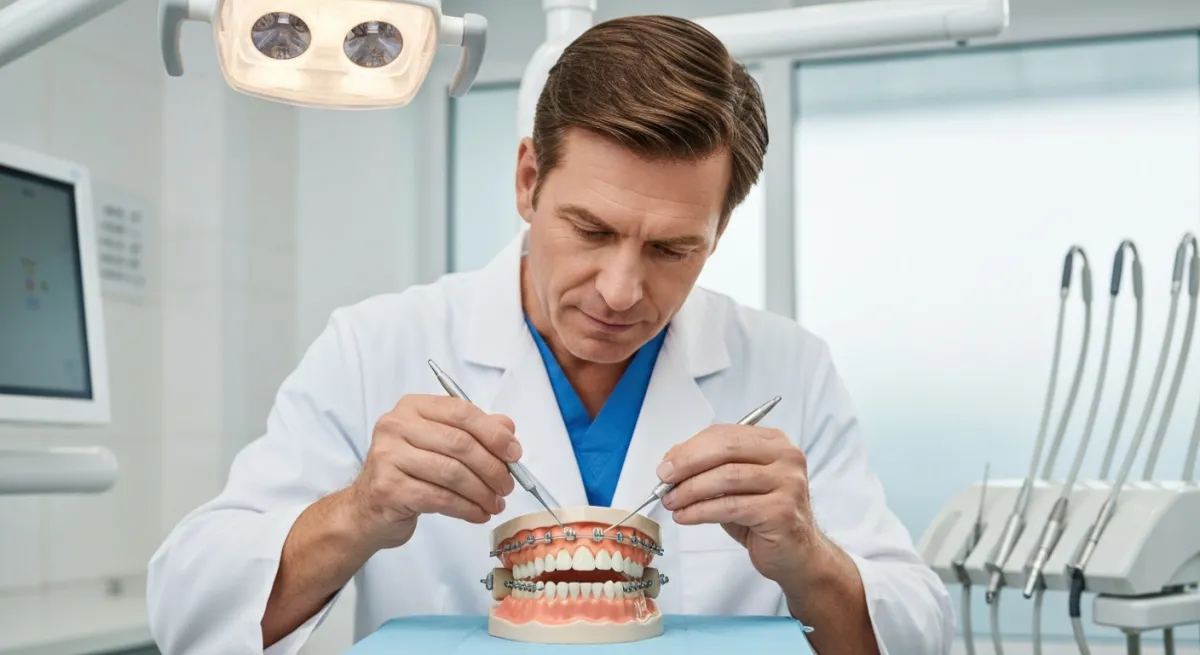
What Are Dental Braces?
Dental braces are orthodontic devices used to correct misaligned teeth and jaw problems by applying continuous, gentle pressure over time. They consist of brackets bonded to teeth, connected by an archwire that guides teeth into proper alignment. Modern braces come in multiple varieties — metal, ceramic, lingual (behind the teeth), and self-ligating — each with different advantages in terms of aesthetics, comfort, and treatment speed.
Braces are effective for treating a wide range of orthodontic issues: crowding, spacing, overbite, underbite, crossbite, and open bite. They can be used by both teenagers and adults — there is no upper age limit. At Samhita Dental, we offer all major types of braces with personalized treatment planning to help you achieve a perfectly aligned, healthy smile.
Types of Braces — Comprehensive Comparison
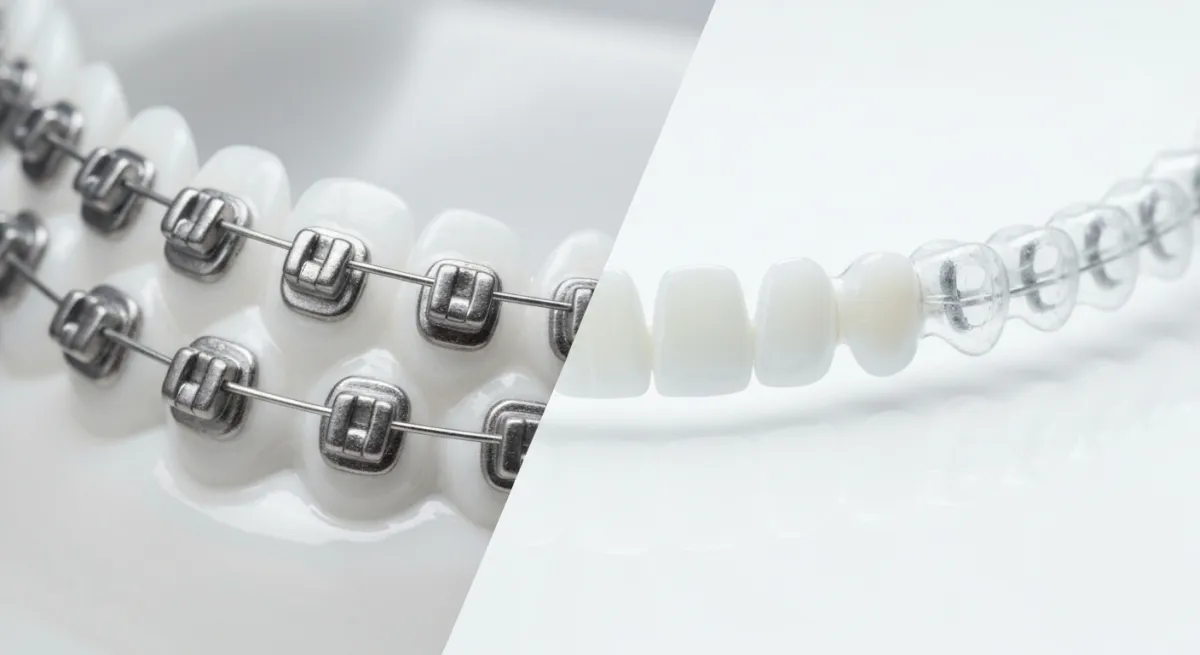
Metal Braces (Traditional Braces)
- Most common and time-tested type of orthodontic braces
- Made from high-grade stainless steel brackets and archwires
- Most affordable option
- Effective for all types of orthodontic issues, including complex cases
- Modern metal braces are smaller, more comfortable, and less obtrusive than older designs
- Option to add coloured elastic bands (popular with younger patients)
- Treatment duration: 12-24 months typically
Ceramic Braces (Tooth-Coloured Braces)
- Brackets made from clear or tooth-coloured ceramic material
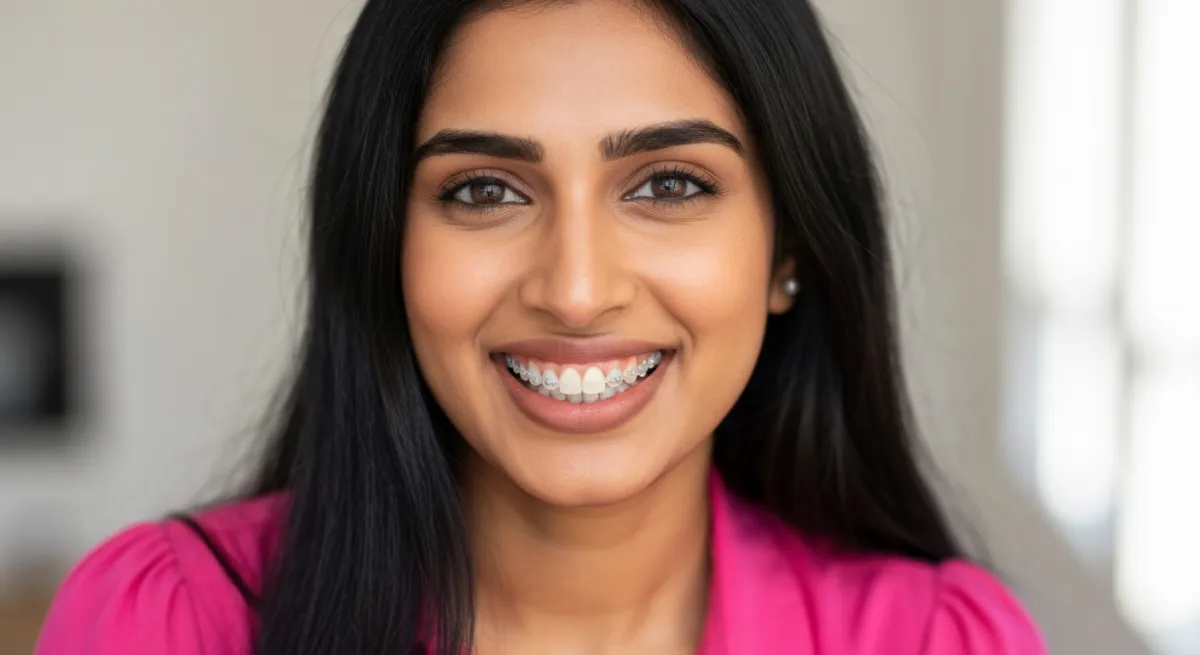
- Blend in with natural tooth colour — significantly less visible than metal
- Also known as transparent braces or clear braces
- Same effectiveness as metal braces for most cases
- Slightly more expensive than metal braces
- Require careful maintenance — ceramic brackets can stain if oral hygiene is not maintained
- Treatment duration: 12-24 months
Self-Ligating Braces
- Use a specialised clip mechanism instead of elastic bands to hold the archwire
- Available in metal and ceramic (clear) varieties
- Advantages: fewer clinic visits (wire adjustments are faster), potentially shorter treatment time, easier to clean (no elastics to trap food), less friction and discomfort
- Slightly higher cost than traditional braces
- Increasingly popular for both teens and adults
Lingual Braces (Behind-the-Teeth Braces)
- Brackets are bonded to the back (lingual) surface of teeth
- Completely invisible from the front — no one can see you are wearing braces
- Ideal for adults and professionals who need complete discretion
- Effective for most orthodontic issues
- Most expensive braces option
- Require a skilled orthodontist for placement and adjustment
- May initially affect speech and tongue comfort — patients adapt within 1-2 weeks
- Treatment duration: 12-24 months (may be slightly longer than traditional braces)
Which Braces Type Is Right for You?
| Feature | Metal Braces | Ceramic Braces | Self-Ligating | Lingual Braces |
|---|---|---|---|---|
| Visibility | Visible (silver) | Low visibility (tooth-coloured) | Low-medium | Invisible (behind teeth) |
| Comfort | Good | Good | Better (less friction) | Initial adjustment period |
| Treatment Speed | Standard | Standard | Potentially faster | Standard to slightly longer |
| Maintenance | Standard | Requires more care (staining) | Easier (no elastics) | Moderate (harder to clean) |
| Case Suitability | All cases (mild to complex) | Most cases | Most cases | Most cases |
| Cost | Most affordable | Moderate | Moderate-High | Most expensive |
Braces Procedure & Treatment Timeline
- Initial Consultation & Assessment: Visit Samhita Dental for an orthodontic consultation. The dentist examines your teeth, jaw alignment, and bite. Digital X-rays (in-house OPG) and photographs are taken for a complete assessment. We discuss your goals and the best braces type for your case, providing a customized treatment plan with estimated duration and cost.
- Preparatory Work (if needed): Some patients may need teeth cleaning, cavity fillings, or extractions before braces. Any pre-existing dental issues must be addressed before orthodontic treatment begins to ensure a healthy foundation.
- Braces Placement: Brackets are bonded to each tooth using dental adhesive, and an archwire is threaded through the brackets and secured. The entire process takes 1-2 hours and is painless. You will feel some pressure and tightness in the first few days — this is normal.
- Regular Adjustments: Visit the clinic every 3-4 weeks for wire adjustments and progress checks. Each appointment takes approximately 20-30 minutes. The dentist tightens or replaces the archwire to continue moving teeth. Some soreness after adjustments is normal and subsides within 1-2 days.
- Active Treatment Period: Average treatment duration is 12-24 months depending on complexity (mild cases: 8-12 months, moderate cases: 12-18 months, complex cases: 18-30 months). Patient compliance directly affects duration.
- Braces Removal & Retainer: Once teeth reach their final aligned position, braces are removed. Removal is painless and takes approximately 30-60 minutes. A retainer is provided to maintain your new smile and must be worn as directed to prevent relapse.
Who Needs Braces? Common Orthodontic Issues
- Crowded Teeth: Teeth overlap, twist, or are pushed out of alignment due to insufficient jaw space. One of the most common reasons for braces. Can make oral hygiene difficult. Braces create space and align teeth properly.
- Gaps Between Teeth (Spacing): Noticeable gaps or spaces between teeth caused by missing teeth, small teeth, or jaw size discrepancy. Braces close gaps by moving teeth closer together.
- Overbite (Upper Teeth Protrusion): Upper front teeth extend significantly over lower teeth. Can cause jaw pain and wear on lower teeth. Braces gradually correct the bite alignment.
- Underbite: Lower teeth sit in front of upper teeth. Often caused by jaw growth discrepancy. Braces can correct mild to moderate underbites.
- Crossbite: One or more upper teeth sit inside (behind) the lower teeth. Can cause uneven wear, jaw pain, and gum recession. Early treatment is recommended.
- Open Bite: Front teeth do not meet when back teeth are closed. Often caused by habits like thumb-sucking. Braces combined with habit correction can resolve open bites.
Not sure if you need braces? Book a consultation at Samhita Dental. Our dentist will examine your teeth and recommend the most effective treatment for your specific orthodontic needs.
Braces Cost Breakdown by Type
Braces costs vary based on the type of braces, the complexity of your case, and the treatment duration. At Samhita Dental, we believe in transparent pricing so you can make an informed decision.
Braces Cost at Samhita Dental
| Braces Type | Cost Range (INR) | Treatment Duration |
|---|---|---|
| Metal Braces | 25,000 - 50,000 | 12-24 months |
| Ceramic Braces | 35,000 - 70,000 | 12-24 months |
| Self-Ligating Braces | 40,000 - 80,000 | 10-22 months |
| Lingual Braces | 80,000 - 1,50,000 | 12-24 months |
What Affects the Cost of Braces?
- Type of braces chosen — metal is most affordable, lingual is most expensive
- Case complexity — simple crowding vs severe malocclusion
- Treatment duration — longer treatments require more adjustment visits
- Additional procedures — extractions, spacers, or elastic bands if needed
- Retainer type — fixed retainer vs removable retainer after treatment
Visit Samhita Dental for a consultation to receive an accurate cost estimate based on your specific orthodontic needs. Every patient's case is different, and an in-person assessment is the best way to determine the right braces type and cost.
Braces vs Clear Aligners — Comparison
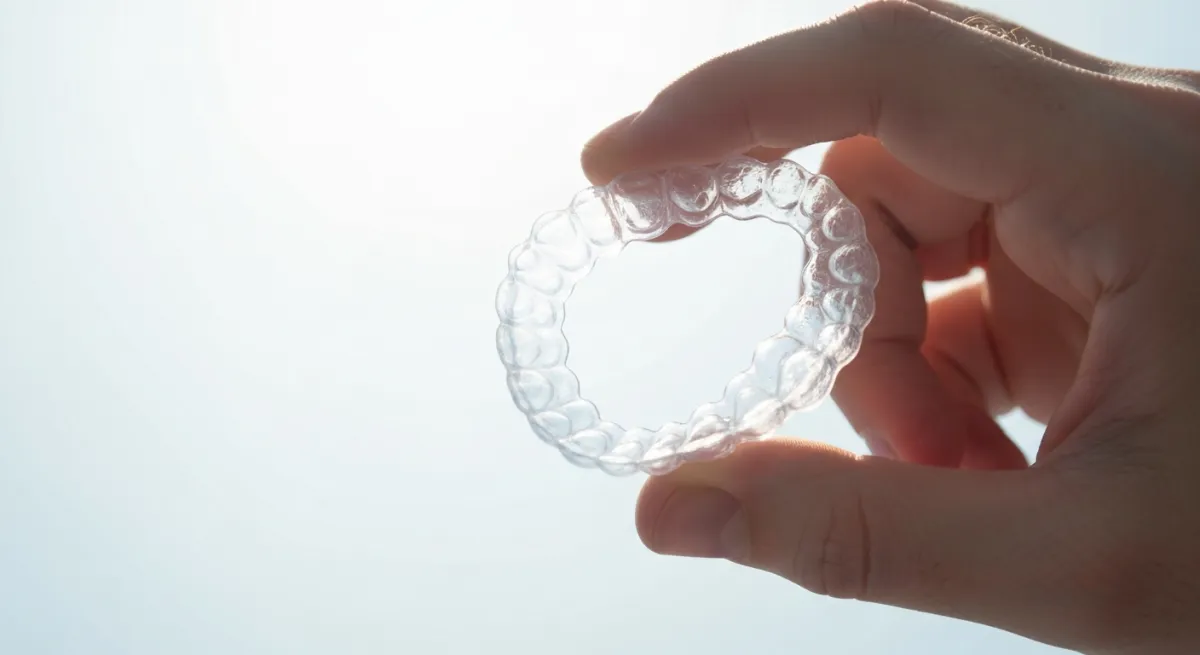
If you are trying to decide between traditional braces and clear aligners, here is a side-by-side comparison to help you choose the right option.
| Factor | Traditional Braces | Clear Aligners |
|---|---|---|
| Appearance | Visible (metal/ceramic brackets) | Virtually invisible (transparent) |
| Removability | Fixed for entire treatment | Removable for eating, brushing |
| Treatment Scope | Mild to complex cases | Mild to moderate cases |
| Diet Restrictions | Yes (avoid hard, sticky foods) | None (remove aligners to eat) |
| Oral Hygiene | More challenging | Normal brushing and flossing |
| Compliance | Automatic (braces work 24/7) | Requires discipline (20-22 hrs/day) |
| Cost | INR 25,000 - 1,50,000 | INR 1,00,000 - 4,00,000 |
Both braces and clear aligners are effective teeth-straightening solutions. The best choice depends on your specific orthodontic needs, lifestyle, budget, and aesthetic preferences. At Samhita Dental, we offer both braces and clear aligners. Our dentist will recommend the most effective option for your case during your consultation.
Want to explore clear aligners? Read our complete guide to Clear Aligners & Invisible Braces.
Life with Braces — Care & Maintenance
Foods to Avoid with Braces
| Category | Avoid | Why |
|---|---|---|
| Hard Foods | Nuts, hard candies, raw carrots, ice | Can break brackets and bend wires |
| Sticky Foods | Caramel, toffee, chewing gum | Stick to brackets, difficult to clean |
| Crunchy Foods | Popcorn, chips, hard bread crusts | Can dislodge brackets |
| Biting Foods | Corn on the cob, whole apples | Force on brackets from biting directly |
You can still eat most of your favourite foods — just cut them into small pieces. Apples, carrots, and similar items can be sliced instead of bitten into.
Oral Hygiene with Braces
- Brush after every meal (food gets trapped around brackets easily)
- Use an interdental brush (proxy brush) to clean between brackets and under wires
- Floss daily using a floss threader or orthodontic flosser
- Use a fluoride mouthwash to strengthen enamel
- Visit the dentist for regular cleanings during treatment (scaling every 6 months)
Managing Discomfort & Emergencies
- Mild soreness after adjustments is normal and lasts 1-3 days. Soft foods and warm salt water rinses help.
- Use orthodontic wax on brackets that irritate the cheeks or lips.
- If a bracket breaks, contact Samhita Dental immediately. Apply wax to prevent irritation.
- If a wire comes loose, use the eraser end of a pencil to gently push it back into place and schedule an emergency visit.
Braces & Orthodontics — Frequently Asked Questions
Related Articles
Learn more about this treatment and oral health from our blog
Book an appointment today
Provide your contact details and get a call back from our team. You can also reach us on 7483578147