
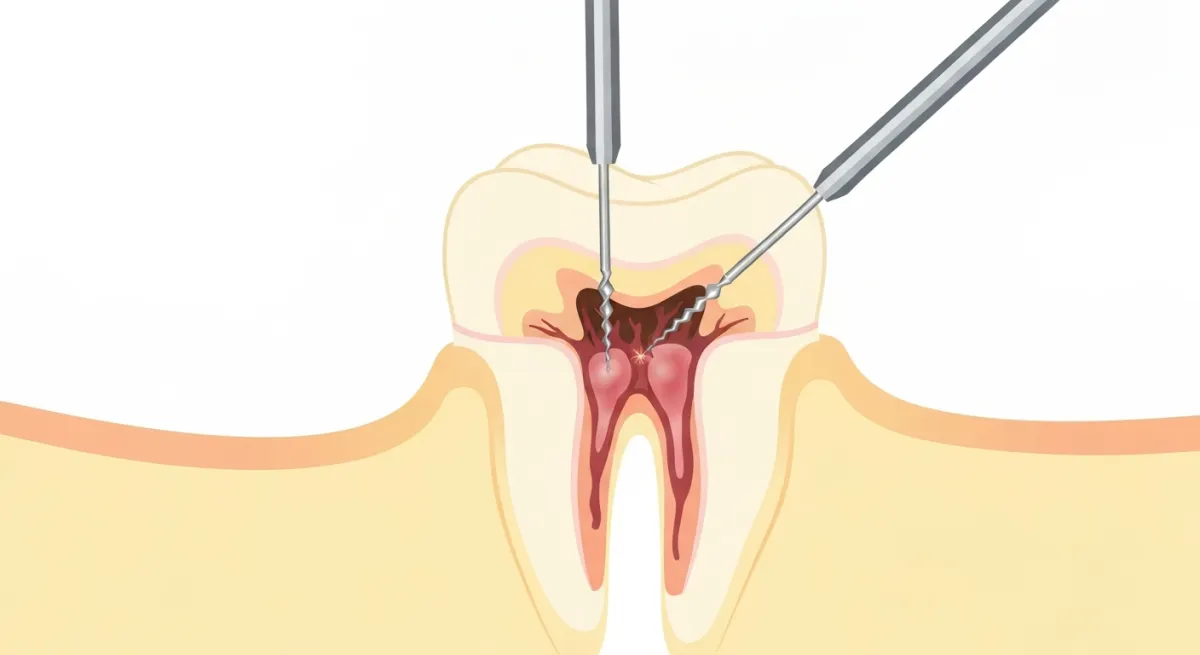
What Is Root Canal Treatment?
Root canal treatment, also known as endodontic therapy, is a dental procedure designed to save a tooth that has become severely infected or damaged. During the procedure, the infected or inflamed pulp tissue inside the tooth is carefully removed, the interior of the tooth is cleaned and disinfected, and the space is filled and sealed to prevent re-infection. The pulp is the soft tissue inside the tooth that contains nerves, blood vessels, and connective tissue. When bacteria penetrate through deep decay, cracks, or trauma, this pulp becomes infected, causing significant pain and potentially leading to an abscess if left untreated.
At Samhita Dental and Polyclinic in Basaveshwaranagar, Bangalore, root canal treatment is performed using modern rotary endodontic instruments and apex locators to ensure precision, efficiency, and patient comfort. The procedure is carried out under effective local anaesthesia, making it virtually painless. Contrary to popular belief, a root canal relieves pain rather than causing it — the discomfort you feel before treatment is caused by the infection itself, not by the procedure.
After the root canal is completed, your dentist will typically recommend placing a dental crown over the treated tooth to restore its strength and protect it from fracture during normal chewing. With a well-fitted crown, a root canal treated tooth can last a lifetime.
Signs You Need Root Canal Treatment
Not every toothache requires a root canal, but certain symptoms strongly indicate that the pulp of your tooth may be infected or dying. You should visit a dentist promptly if you experience any of the following:
- Severe, persistent toothache — throbbing pain that does not subside with over-the-counter painkillers, especially pain that worsens at night or when lying down.
- Prolonged sensitivity — lingering pain after consuming hot or cold foods and beverages, lasting more than a few seconds after the stimulus is removed.
- Darkening or discolouration of the tooth, which indicates that the nerve inside may be dying.
- Swelling or tenderness in the gums near the affected tooth, sometimes accompanied by a small pimple-like bump (fistula) on the gum that may drain pus.
- Pain when biting or chewing, suggesting infection at the root tip.
- A chipped or cracked tooth that has exposed the pulp to bacteria.
- Previous deep dental filling or repeated dental work on the same tooth.
If you notice any of these symptoms, do not delay your visit. Early treatment can save the tooth and prevent the infection from spreading to surrounding tissues and bone. Our in-house digital X-ray facilities allow us to quickly diagnose the extent of infection. Walk into our clinic or call us for an emergency dental appointment.
In some cases, a tooth may need a root canal even without obvious symptoms. Regular dental check-ups and X-rays every six months help detect hidden infections before they cause pain.
Root Canal Treatment Procedure: Step by Step
Understanding the procedure can ease anxiety. Here is exactly what happens during a root canal at Samhita Dental:
Step 1: Diagnosis and X-Ray
The dentist examines the tooth and takes a digital X-ray (RVG) to assess the extent of infection, the shape of the root canals, and whether the surrounding bone is affected. This helps in planning the treatment precisely.
Step 2: Local Anaesthesia
The area around the affected tooth is numbed using local anaesthesia. You will feel a brief pinch from the injection, after which the tooth and surrounding tissues become completely numb. The procedure itself is painless. Patients with dental anxiety can discuss sedation options with our team.
Step 3: Isolation with Rubber Dam
A rubber dam is placed around the tooth to keep it dry and free from saliva during the procedure, ensuring a clean working field and preventing bacteria from entering the canals.
Step 4: Access Opening and Pulp Removal
The dentist creates a small opening in the crown of the tooth to access the pulp chamber. Using specialised instruments, the infected or dead pulp tissue is carefully removed from the chamber and root canals.
Step 5: Cleaning, Shaping, and Disinfection
The root canals are cleaned, shaped, and disinfected using rotary files and antibacterial irrigating solutions. This step is critical for eliminating all bacteria and infected tissue. An electronic apex locator is used to determine the exact length of each canal for thorough cleaning.
Step 6: Filling the Root Canals
Once the canals are clean and dry, they are filled with a biocompatible rubber-like material called gutta-percha, along with a sealing cement. This seals the canals permanently and prevents bacteria from re-entering.
Step 7: Restoration with a Crown
After the root canal, the tooth needs a permanent restoration. In most cases, a dental crown is recommended to protect the treated tooth and restore its full strength and function. The crown is typically placed within one to two weeks after the root canal is completed.
Most root canal treatments at Samhita Dental are completed in one to two visits, with each session lasting about 45 to 60 minutes depending on the complexity of the case.
Root Canal Treatment Cost in Bangalore
At Samhita Dental in Basaveshwaranagar, Bangalore, the cost of root canal treatment ranges from INR 5,000 to INR 6,000 per tooth. The exact cost depends on several factors:
- Position of the tooth — Front teeth (incisors) have a single canal and are simpler to treat, while back teeth (molars) have three or four canals, requiring more time and skill.
- Severity of infection — Extensive infections that have spread to the bone may require additional medication or multiple sittings.
- Type of restoration — The cost of the crown placed after the root canal is separate and depends on the material chosen (metal, PFM, ceramic, or zirconia).
Compared to the alternative of extraction followed by a dental implant (which can cost from INR 36,000), root canal treatment with a crown is often the more cost-effective long-term solution. Our pricing is transparent with no hidden charges, and your dentist will provide a complete cost breakdown during your consultation.
Root Canal vs Tooth Extraction: Which Is Better?
One of the most common questions patients ask is whether they should save the tooth with a root canal or simply have it extracted. Here is a detailed comparison:
| Factor | Root Canal Treatment | Tooth Extraction |
|---|---|---|
| Preserves natural tooth | Yes — your own tooth is saved | No — the tooth is permanently removed |
| Procedure cost | INR 5,000–6,000 + crown | INR 2,000–5,000 + replacement (implant/bridge) |
| Total long-term cost | Lower — one procedure + crown | Higher — extraction + implant or bridge needed |
| Treatment time | 1–2 visits over 1–2 weeks | 1 visit for extraction, 3–6 months for implant |
| Adjacent teeth affected? | No | May shift over time if tooth is not replaced |
| Bone preservation | Maintains jawbone structure | Bone loss occurs at extraction site over time |
| Success rate | 95% with proper crown | 100% (tooth is removed) |
| Best suited for | Teeth with enough structure remaining | Severely fractured or non-restorable teeth |
In most cases, saving your natural tooth with a root canal is the preferred option. A natural tooth functions better than any artificial replacement, and the overall cost is lower. However, if the tooth is severely fractured below the gum line, has insufficient remaining structure, or has a vertical root fracture, extraction may be the only viable option. Your dentist at Samhita Dental will evaluate your specific situation using digital X-rays and recommend the best course of action.
Recovery and Aftercare
Recovery from root canal treatment is straightforward. Most patients return to normal activities the same day. Here is what to expect and how to care for your tooth after the procedure:
- Mild soreness around the treated tooth is normal for two to three days. Over-the-counter pain medication such as ibuprofen is usually sufficient to manage any discomfort.
- Avoid chewing on the treated side until the permanent crown is placed. The tooth is more fragile without a crown and could fracture under heavy biting forces.
- Do not eat hard or sticky foods on the treated tooth until the crown is fitted.
- Maintain oral hygiene by brushing twice daily with fluoride toothpaste and flossing. Be gentle around the treated area for the first few days.
- Get the crown placed promptly — ideally within one to two weeks — to protect the tooth long-term and ensure its survival.
- Attend follow-up appointments as advised so your dentist can verify the healing process through examination and X-rays.
If you experience severe pain, swelling that increases after two to three days, an allergic reaction (rash, hives), or your bite feels uneven, contact Samhita Dental immediately for a review.
Why Root Canal Treatment is Painless at Samhita Dental
Modern root canal treatment is virtually painless. At Samhita Dental, local anaesthesia is administered before the procedure begins, completely numbing the tooth and surrounding area. Most patients compare the experience to getting a filling done. Our in-house endodontist, with 4 years of experience, uses advanced rotary endodontic instruments that work faster and more precisely than traditional hand files. In-house digital X-rays (OPG and RVG) allow accurate diagnosis and treatment planning without guesswork. The entire procedure typically takes 45-60 minutes in a single sitting. After treatment, mild discomfort may last 1-2 days and is easily managed with over-the-counter pain medication.
Root Canal Myths Debunked
Myth: Root canal treatment is extremely painful. Fact: With modern anaesthesia and rotary instruments, root canal treatment is no more uncomfortable than getting a filling. The pain you feel BEFORE treatment (from the infected tooth) is far worse than the procedure itself.
Myth: It is better to extract the tooth than get a root canal. Fact: Saving your natural tooth is almost always the better option. Extracted teeth need replacement with implants or bridges, which costs significantly more. A root canal preserves your natural tooth structure and bite.
Myth: Root canal treatment causes illness. Fact: This myth originated from debunked research from the 1920s. Decades of scientific evidence confirm that root canal treatment is safe and does not cause systemic disease.
Myth: Root canal treatment takes many visits. Fact: Most root canals at Samhita Dental are completed in a single sitting of 45-60 minutes. Complex cases with multiple canals may require two visits.
Myth: A crowned tooth does not need further care. Fact: Root canal-treated teeth still need regular brushing, flossing, and dental check-ups. The crown protects the tooth but does not make it immune to gum disease or decay at the margins.
Why Choose Samhita Dental for Root Canal Treatment
Samhita Dental and Polyclinic in Basaveshwaranagar, Bangalore is a trusted choice for root canal treatment for several important reasons:
- Experienced specialist — Dr. Sumukh, MDS in Oral and Maxillofacial Surgery with over 15 years of clinical experience, leads the team and ensures that complex cases are managed with expertise and precision.
- Modern equipment — We use rotary endodontic instruments, electronic apex locators, and digital X-rays for accurate, efficient, and comfortable treatment.
- Painless procedures — Effective anaesthesia protocols and a gentle approach mean you can expect a comfortable, anxiety-free experience from start to finish.
- Affordable pricing — Root canal treatment starting at INR 5,000 per tooth, with transparent pricing and no hidden costs.
- Strict sterilisation — All instruments are autoclaved and sterilisation protocols are rigorously followed for every patient, every time.
- Convenient location and hours — Located in Basaveshwaranagar with clinic hours from 10 AM to 8 PM, Monday to Saturday, making it easy to schedule appointments around your routine.
- Complete care under one roof — From diagnosis with digital X-rays to the root canal procedure and final crown placement, everything is handled at our clinic without referrals elsewhere.
Root Canal Treatment — Frequently Asked Questions
Related Articles
Learn more about this treatment and oral health from our blog
Book an appointment today
Provide your contact details and get a call back from our team. You can also reach us on 7483578147