
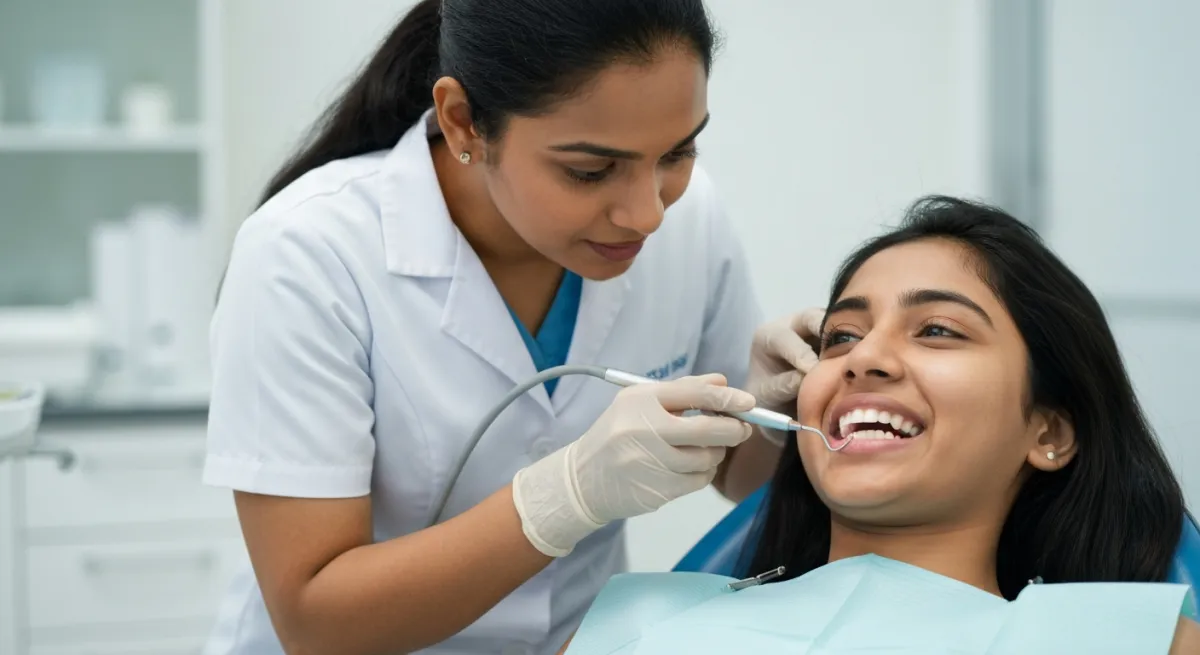
Understanding Gum Disease — Gingivitis vs Periodontitis
Gum disease, also known as periodontal disease, is a bacterial infection that affects the gums and the bone supporting your teeth. It develops when plaque — a sticky film of bacteria — accumulates along and below the gum line. Left untreated, gum disease can progress from mild inflammation to severe tissue and bone destruction, ultimately leading to tooth loss.
Understanding the stages of gum disease is the first step toward effective treatment. The disease progresses through distinct stages, each requiring a different treatment approach:
| Stage | Condition | Symptoms | Treatment |
|---|---|---|---|
| Stage 1 | Gingivitis | Red, swollen gums; bleeding while brushing; mild bad breath | Professional teeth cleaning, improved oral hygiene |
| Stage 2 | Early Periodontitis | Gum pockets (4–5 mm), early bone loss visible on X-ray, persistent bad breath | Scaling & root planing (deep cleaning) |
| Stage 3 | Moderate Periodontitis | Deeper pockets (5–7 mm), noticeable bone loss, gum recession, loose teeth | Deep cleaning + possible flap surgery or LANAP laser therapy |
| Stage 4 | Advanced Periodontitis | Severe bone loss, deep pockets (7+ mm), tooth mobility, pus discharge, pain | Periodontal surgery, bone grafting, possible extractions + implants |
At Samhita Dental and Polyclinic in Basaveshwaranagar, Bangalore, our dental team led by Dr. Sumukh Muniraj (MDS Oral & Maxillofacial Surgery, 15+ years of experience) uses digital X-rays and OPG imaging to accurately diagnose the stage of gum disease and create a customised treatment plan for every patient.
Signs and Symptoms of Gum Disease
Gum disease can develop silently, often without pain in the early stages. This makes regular dental check-ups essential for early detection. Watch for these warning signs:
- Bleeding gums — Gums that bleed when you brush, floss, or eat hard foods
- Red, swollen, or tender gums — Healthy gums should be firm and pale pink
- Persistent bad breath (halitosis) — Chronic bad breath or a bad taste in the mouth that does not improve with brushing
- Receding gums — Gums pulling away from the teeth, making teeth appear longer than normal
- Loose or shifting teeth — Teeth that feel mobile or have changed position over time
- Pus between teeth and gums — A clear sign of active periodontal infection
- Changes in bite alignment — A change in how your teeth fit together when you bite or chew
- Pain while chewing — Discomfort or tenderness when eating, especially with hard or sticky foods
- Sensitive teeth — Increased sensitivity to hot, cold, or sweet foods due to exposed root surfaces
Risk Factors for Gum Disease
Certain factors increase your risk of developing gum disease:
- Poor oral hygiene — Irregular brushing and not flossing allow plaque to build up
- Smoking and tobacco use — Tobacco significantly increases the risk and severity of periodontal disease
- Diabetes — Uncontrolled blood sugar weakens the immune response and slows healing
- Hormonal changes — Pregnancy, puberty, and menopause can make gums more susceptible to inflammation
- Medications — Certain drugs that cause dry mouth or gum overgrowth
- Genetics — Family history of periodontal disease increases susceptibility
- Misaligned or crowded teeth — Difficult-to-clean areas trap more plaque and bacteria
If you notice any symptoms or fall into a risk category, schedule an appointment at Samhita Dental for a thorough periodontal evaluation. Early detection can prevent tooth loss and reduce treatment costs significantly.
Non-Surgical Gum Treatment — Scaling & Root Planing
Scaling and root planing (SRP) is the gold standard non-surgical treatment for gum disease. Often referred to as "deep cleaning," it is the first line of treatment for patients diagnosed with early to moderate periodontitis. Unlike a routine teeth cleaning that addresses plaque above the gum line, SRP goes deeper to clean the root surfaces below the gum line within periodontal pockets.
How Scaling & Root Planing Works
Scaling: Using ultrasonic instruments and specialised hand scalers, the periodontist meticulously removes all plaque, tartar (calculus), and bacterial toxins from the tooth surfaces and root surfaces within the periodontal pockets. Ultrasonic scalers use high-frequency vibrations combined with a water spray to break apart hardened tartar efficiently.
Root Planing: After scaling, the root surfaces are smoothed (planed) to remove embedded bacterial toxins from the cementum. This smooth, clean surface allows the gum tissue to heal and reattach to the tooth, reducing pocket depth naturally.
The procedure is typically performed in two visits, treating one half of the mouth (two quadrants) per session. Local anaesthesia ensures complete comfort throughout. After treatment, the gums will gradually tighten around the teeth as they heal over the following 4–6 weeks. Follow-up appointments are scheduled to re-measure pocket depths and evaluate healing.
For many patients with Stage 2 periodontitis, scaling and root planing alone — combined with improved home care — is sufficient to halt disease progression and restore gum health without surgery.
LANAP Laser Gum Treatment
Samhita Dental is one of the few clinics in Basaveshwaranagar to offer LANAP (Laser-Assisted New Attachment Procedure) — an advanced, FDA-cleared laser therapy for treating moderate to advanced gum disease. LANAP uses a specialised Nd:YAG laser to selectively remove diseased gum tissue and kill bacteria while preserving healthy tissue and promoting natural bone regeneration.
How LANAP Works
The LANAP protocol involves passing a thin laser fibre (about the width of three human hairs) between the gum and tooth. The laser energy specifically targets the pigmented bacteria and diseased tissue, leaving healthy tissue unharmed. After the laser pass, the root surfaces are cleaned using ultrasonic scalers. A second laser pass then creates a stable fibrin clot that seals the pocket, acting as a natural bandage that promotes healing and new tissue attachment.
LANAP Laser vs Traditional Gum Surgery
| Feature | LANAP Laser Therapy | Traditional Flap Surgery |
|---|---|---|
| Incision | No incisions or sutures required | Requires scalpel incision and sutures |
| Pain Level | Minimal discomfort; most patients need only over-the-counter painkillers | Moderate to significant post-operative pain |
| Recovery Time | 24–48 hours; most resume normal activities next day | 1–2 weeks; dietary restrictions apply |
| Gum Recession | Minimal to no gum recession | Noticeable gum recession common |
| Bone Regeneration | Stimulates natural bone regeneration | Does not stimulate bone regrowth on its own |
| Bleeding | Laser cauterises as it works — minimal bleeding | Bleeding during and after surgery |
| Infection Risk | Lower — laser sterilises the treatment area | Higher — open surgical site |
| Tooth Sensitivity | Less post-treatment sensitivity | More sensitivity due to tissue removal |
LANAP is particularly beneficial for patients who are anxious about surgery, have medical conditions that affect healing (such as diabetes), or prefer a minimally invasive approach. Our in-house laser equipment means you receive this advanced treatment without needing a referral to a specialist hospital.
Gum Surgery Options
When non-surgical treatments are insufficient to control gum disease — particularly in Stage 3 and Stage 4 periodontitis — surgical intervention becomes necessary. At Samhita Dental, Dr. Sumukh Muniraj (MDS Oral & Maxillofacial Surgery) performs a full range of periodontal surgical procedures with precision and care.
Flap Surgery (Open Flap Debridement)
Flap surgery is the most common periodontal surgical procedure. The periodontist lifts back the gum tissue to access the root surfaces and underlying bone. Deep tartar deposits, infected granulation tissue, and bacteria are thoroughly removed. The bone may be recontoured to eliminate craters where bacteria collect. The gum tissue is then repositioned and sutured snugly around the teeth, reducing pocket depth and making home cleaning more effective.
Guided Tissue Regeneration (GTR)
When periodontitis has destroyed the bone supporting a tooth, regenerative procedures can help regrow lost tissue. A biocompatible membrane is placed between the gum tissue and bone to prevent the fast-growing gum tissue from invading the space where bone needs to regrow. This allows the slower-growing bone and connective tissue to regenerate naturally. Growth factors or bone graft materials may be used in combination to enhance results.
Crown Lengthening
Crown lengthening involves removing excess gum tissue — and sometimes a small amount of bone — to expose more of the tooth structure. This procedure serves two purposes:
- Restorative: When a tooth is broken or decayed below the gum line, crown lengthening exposes enough tooth structure to support a dental crown or bridge
- Cosmetic: For patients with a "gummy smile" where excessive gum tissue covers the teeth, crown lengthening creates a more balanced, aesthetically pleasing smile line
Soft Tissue Graft (Gum Graft)
When gum recession exposes the tooth roots, a soft tissue graft can cover the exposed roots and restore the gum line. Tissue is taken from the palate (roof of the mouth) or a tissue bank and sutured over the recession area. This protects the roots from decay, reduces sensitivity, and improves the appearance of the gum line.
Bone Grafting
Bone grafting replaces bone lost due to periodontitis using natural bone (from the patient or a donor), synthetic bone substitutes, or a combination. The graft material acts as a scaffold for the body to regenerate new bone. This procedure is often essential before dental implant placement in areas where bone has been lost due to long-standing gum disease.
Gum Treatment Cost in Bangalore
At Samhita Dental in Basaveshwaranagar, we offer transparent and competitive pricing for all gum treatments. The cost depends on the type of treatment, the severity of the disease, and the number of teeth or quadrants involved.
| Treatment | Cost Range (INR) | Details |
|---|---|---|
| Scaling (Professional Cleaning) | 1,500 – 3,000 | Full mouth; removes plaque and tartar above gum line |
| Deep Cleaning (Scaling & Root Planing) | 3,000 – 5,000 | Per quadrant; includes subgingival cleaning and root smoothing |
| Flap Surgery | 4,000 – 8,000 | Per quadrant; includes anaesthesia, surgery, and sutures |
| Bone Grafting | 5,000 – 15,000 | Per site; cost varies by graft material used |
| LANAP Laser Therapy | 8,000 – 15,000 | Per quadrant; minimally invasive laser treatment |
Exact costs are determined after a clinical examination and diagnostic X-rays. Our team provides a detailed treatment plan with a transparent cost breakdown before starting any procedure. EMI payment options are available for extensive treatment plans.
Investing in gum treatment early can save significant costs in the long run. Treating gingivitis with a simple scaling is far more affordable than managing advanced periodontitis that may require surgery, bone grafts, or tooth replacement with dental implants or bridges.
Prevention — How to Keep Your Gums Healthy
Preventing gum disease is far simpler and less expensive than treating it. Follow these evidence-based strategies to maintain healthy gums for life:
- Brush twice daily — Use a soft-bristled toothbrush and fluoride toothpaste. Brush for at least two minutes, angling the bristles toward the gum line at 45 degrees
- Floss every day — Flossing removes plaque and food particles from between teeth and below the gum line where your toothbrush cannot reach
- Use an antimicrobial mouthwash — A chlorhexidine or therapeutic mouthwash can reduce bacteria and plaque formation
- Get professional cleanings every 6 months — Regular teeth cleaning at Samhita Dental removes tartar that home brushing cannot
- Quit smoking and tobacco — Tobacco use is the single most significant modifiable risk factor for gum disease
- Manage diabetes and systemic health — Keep blood sugar under control and inform your dentist about all medical conditions and medications
- Eat a balanced diet — Vitamins C and D, calcium, and antioxidants support gum health. Limit sugary snacks and acidic drinks
- Stay hydrated — Adequate water intake promotes saliva production, which naturally cleanses the mouth
- Address teeth grinding (bruxism) — Clenching or grinding puts excessive force on teeth and can accelerate gum disease. Ask about a night guard if applicable
Why Choose Samhita Dental for Gum Treatment?
Samhita Dental and Polyclinic in Basaveshwaranagar is trusted by thousands of patients across Bangalore for comprehensive gum disease treatment. Here is what sets us apart:
- Experienced Oral Surgeon — Dr. Sumukh Muniraj holds an MDS in Oral & Maxillofacial Surgery with 15+ years of clinical experience in periodontal and implant procedures
- In-House LANAP Laser — One of the few clinics in the area offering advanced laser gum therapy without external referrals
- Complete In-House Diagnostics — OPG, digital X-rays, and intraoral cameras for accurate diagnosis and treatment planning
- 100% Sterilization — Autoclave sterilization and strict infection control protocols that meet international standards
- Personalised Treatment Plans — Every patient receives a customised treatment plan based on their specific condition and budget
- Affordable & Transparent Pricing — No hidden fees; EMI options available for extensive treatments
- Convenient Location & Hours — Centrally located in Basaveshwaranagar with clinic hours from 10 AM to 8 PM, Monday to Saturday
Book your gum treatment consultation today by calling 7483578147 or booking an appointment online.
Gum Treatment — Frequently Asked Questions
Book an appointment today
Provide your contact details and get a call back from our team. You can also reach us on 7483578147