
Why Does Your Child Need a Separate Dentist?
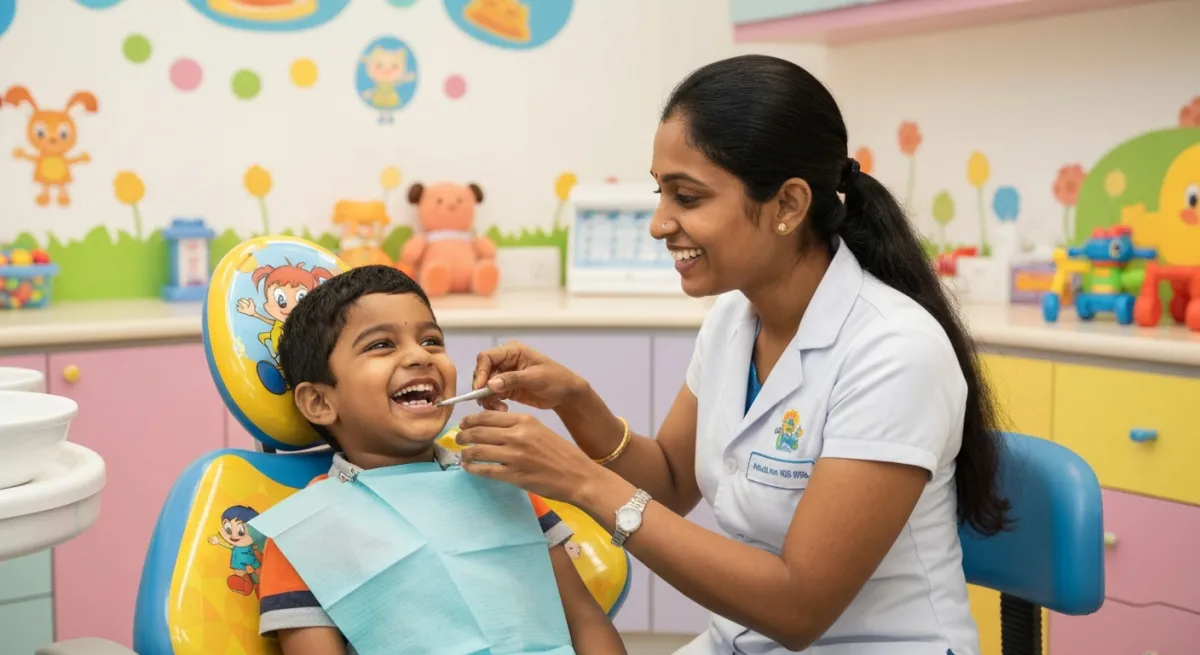
Children are not simply small adults — their teeth, jaws and emotional needs are different at every stage of growth. A kids' dentist understands the unique anatomy of primary (baby) teeth, the eruption timeline of permanent teeth and the behavioural nuances that make a child feel safe in a dental chair. At Samhita Dental and Polyclinic in Basaveshwaranagar, Bangalore, our team led by Dr. Sumukh (MDS, Oral & Maxillofacial Surgeon with 15+ years of experience) and Dr. Anvitha provides specialised paediatric dental care in a warm, child-friendly environment. We use the tell-show-do technique, positive reinforcement and gentle communication so that your child associates the dentist with a positive experience rather than fear.
Early dental visits also allow us to catch problems like cavities, misaligned teeth and harmful oral habits before they become serious. The Indian Academy of Paediatric Dentistry recommends that every child see a dentist by their first birthday — and Samhita Dental is one of the most affordable kids' dental care providers in Bangalore to help you start early without financial worry.
Your Child's First Dental Visit — What to Expect
When Should You Bring Your Child?
The ideal time for a first dental visit is within six months of the eruption of the first baby tooth, or by age one — whichever comes first. If your child is older and has never visited a dentist, it is never too late to start. We welcome children of all ages.
What Happens During the First Visit?
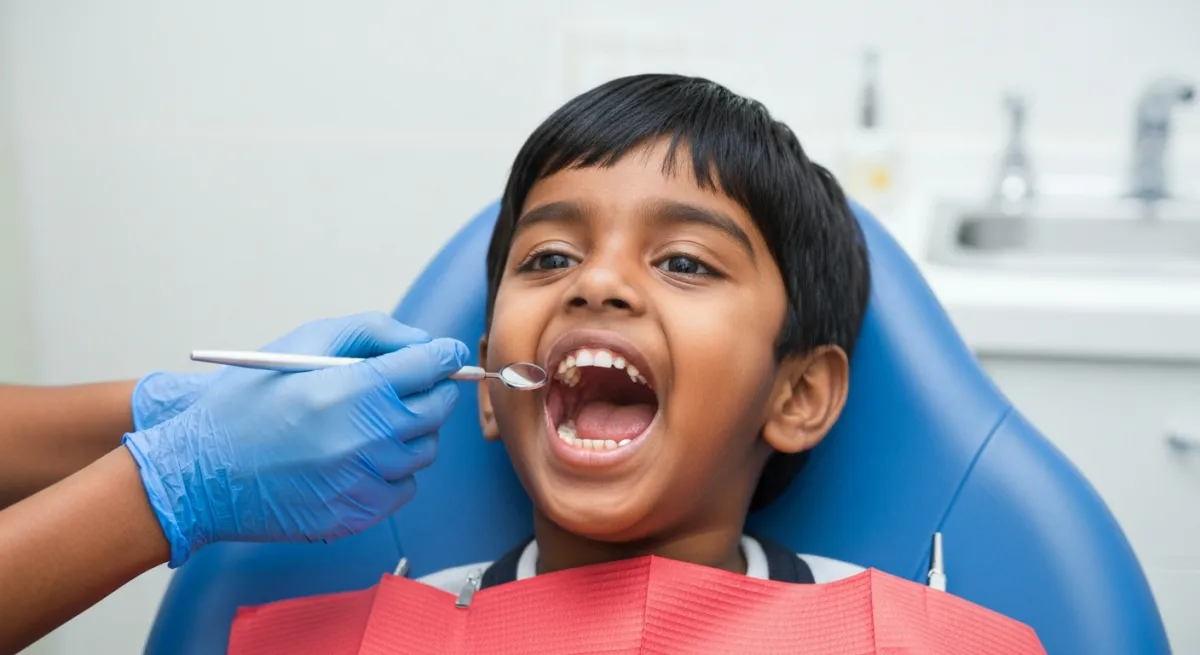
The first visit is primarily about building trust. Our dentist will:
- Gently examine your child's teeth, gums, jaw and bite
- Check for early signs of cavities, developmental issues or oral habits
- Clean the teeth if the child is comfortable
- Discuss feeding practices, fluoride needs and teething concerns with parents
- Create a personalised preventive care plan
The entire visit usually takes 20 to 30 minutes. Most children leave the clinic smiling.
How to Prepare Your Child
Talk about the visit in simple, positive language. Avoid words like "pain," "injection" or "drill." Read a fun picture book about visiting the dentist. Schedule the appointment at a time when your child is well-rested and not hungry. Bring a favourite toy or comfort item. And most importantly — stay calm yourself, because children mirror parental anxiety.
Age-Specific Dental Care for Children
Infants (0–3 Years)
Baby teeth begin to appear around six months and all twenty primary teeth are usually in place by age three. During this period we focus on:
- First dental examination and risk assessment
- Guidance on cleaning infant gums and first teeth
- Advice on breastfeeding, bottle-feeding and weaning to prevent baby bottle tooth decay
- Fluoride varnish application if decay risk is identified
- Monitoring oral habits like thumb sucking and pacifier use
Early Childhood (3–6 Years)
This stage is when most children develop enough cooperation for a full dental visit. Key focus areas include:
- Regular dental cleanings every six months
- Fluoride application to strengthen enamel
- Pit and fissure sealants on newly erupted molars
- Early detection and treatment of cavities with tooth-coloured fillings
- Assessment and management of thumb sucking, tongue thrusting and mouth breathing
School Age (6–12 Years)
Between ages six and twelve your child transitions from primary to permanent teeth. This is a critical window for interceptive care:
- Monitoring eruption of permanent teeth and identifying crowding or spacing issues early
- Sealants on first and second permanent molars
- Pulp therapy (a child-friendly form of root canal treatment) for deeply decayed baby teeth to preserve space for permanent successors
- Space maintainers if a baby tooth is lost prematurely — often after an early tooth extraction — to hold space for the erupting adult tooth
- Early orthodontic assessment and referral for braces if needed
- Sports mouthguards for active children
Teens (12–18 Years)
Teenagers face unique dental challenges including wisdom tooth eruption, cosmetic concerns and orthodontic treatment. Our care for teens includes:
- Braces and clear aligners for teeth straightening
- Wisdom tooth monitoring and management
- Treatment of cavities, gum inflammation and enamel erosion from acidic diets
- Counselling on the effects of tobacco, vaping and sugary drinks on oral health
- Custom mouthguards for contact sports
Our Pediatric Dental Services
Fluoride Application
Topical fluoride varnish is painted onto the teeth in a quick, painless procedure that takes less than a minute. Fluoride strengthens enamel, reverses early demineralisation and significantly reduces cavity risk. We recommend fluoride application every six months for children at moderate to high risk of decay.
Pit & Fissure Sealants
The chewing surfaces of back teeth have tiny grooves where food particles and bacteria easily get trapped. Sealants are thin, BPA-free resin coatings that flow into these grooves and harden to create a smooth, protective barrier. The procedure is painless, takes just a few minutes per tooth and can reduce cavity risk on treated surfaces by up to 80 percent.
Tooth-Coloured Fillings
When a cavity does develop, we use composite resin fillings that match the natural shade of your child's tooth. These mercury-free fillings bond directly to the tooth structure, providing a durable, aesthetic restoration. For very young children, we use glass ionomer fillings that release fluoride and offer additional protection against further decay.
Pulp Therapy (Pulpotomy & Pulpectomy)
When decay reaches the nerve of a baby tooth, extraction is not always the best answer. Pulp therapy — sometimes called a "baby root canal" — removes the infected portion of the nerve while preserving the tooth. A pulpotomy treats partial nerve involvement, while a pulpectomy addresses a fully infected nerve. Saving the baby tooth maintains space for the permanent tooth to erupt correctly and prevents the need for a space maintainer.
Space Maintainers
If a baby tooth is lost early due to decay, trauma or other reasons, the adjacent teeth can drift into the gap and block the permanent tooth from erupting properly. A space maintainer is a small metal or acrylic appliance that holds the space open until the permanent tooth is ready to come in. It is cemented in place, requires no daily removal and is eventually taken off once the permanent tooth appears.
Habit-Breaking Appliances
Prolonged thumb sucking, tongue thrusting and mouth breathing can alter jaw growth and tooth alignment. When behavioural counselling alone is not enough, we may recommend a fixed or removable habit-breaking appliance. These appliances gently discourage the habit without causing discomfort, allowing the jaws and teeth to develop normally.
Dental Injury Management
Children are prone to dental injuries from falls, sports and play. Whether your child has a chipped, cracked, displaced or knocked-out tooth, prompt treatment is critical. At Samhita Dental we provide emergency dental care for children, including splinting of loosened teeth, re-implantation of avulsed permanent teeth and restorative treatment for fractured teeth. If your child suffers a dental injury, contact us immediately at 7483578147.
Common Dental Problems in Children
Understanding the most frequent paediatric dental issues helps parents take preventive action early:
- Cavities (Dental Caries): The single most common chronic childhood disease. Cavities form when bacteria feed on sugars left on teeth and produce acid that erodes enamel. Regular brushing, fluoride and sealants are the best defences.
- Baby Bottle Tooth Decay: Caused by prolonged exposure to milk, formula or juice — especially when a child falls asleep with a bottle. The upper front teeth are most affected. Weaning off the bottle by age one and cleaning teeth after feeds helps prevent this condition.
- Thumb Sucking & Pacifier Habits: Normal in infants, but if the habit continues beyond age three or four it can push the upper front teeth forward and narrow the palate. Early intervention with counselling or appliances can prevent more complex orthodontic issues later.
- Early Tooth Loss: Losing a baby tooth too early — whether from decay, trauma or infection — can cause neighbouring teeth to shift and block the permanent tooth. Space maintainers prevent this domino effect.
- Crooked or Crowded Teeth: Genetics, premature tooth loss and oral habits all contribute. An early orthodontic evaluation around age seven can identify problems when they are easier and less expensive to correct with braces or clear aligners.
- Dental Anxiety: Fear of the dentist is common in children and can lead to avoidance of dental care. Our team uses age-appropriate communication, a friendly environment and distraction techniques to help anxious children feel comfortable and build positive dental experiences.
- Bruxism (Teeth Grinding): Many children grind their teeth during sleep, especially during periods of growth or stress. While most outgrow it, persistent grinding can wear down enamel and cause jaw pain. A custom night guard may be recommended for severe cases.
Pediatric Dentistry Cost in Bangalore
Pediatric dentistry at Samhita Dental in Basaveshwaranagar starts from INR 500 for a check-up with fluoride application. Children’s treatments are priced below our adult rates, and the exact cost is confirmed after a Rs. 300 examination — before anything is started.
| Treatment | Cost at Samhita Dental | What it is for |
|---|---|---|
| Check-up + fluoride application | From INR 500 | Routine 6-monthly visit, strengthens enamel against decay |
| Pit & fissure sealants | INR 500 – 1,000 per tooth | Seals the grooves of back teeth where cavities usually start |
| Filling (milk or permanent tooth) | INR 500 – 2,500 | Treats a cavity before it reaches the nerve |
| Pulp therapy (pulpectomy / pulpotomy) | INR 1,500 – 3,500 | Saves a badly decayed milk tooth instead of removing it |
See the full dental treatment price list for every treatment, or read more about dental fillings and their costs.
Why Choose Samhita Dental for Your Child
Choosing the right dental clinic for your child is an important decision. Here is why hundreds of families in Basaveshwaranagar and across Bangalore trust Samhita Dental with their children's oral health:
- Experienced Team: Dr. Sumukh (MDS, 15+ years) and Dr. Anvitha bring deep expertise in managing children's dental needs, from routine check-ups to complex procedures.
- Child-Friendly Environment: Our clinic is designed to put children at ease. We use gentle communication, positive reinforcement and the tell-show-do approach to ensure every visit is a pleasant experience.
- Most Affordable Kids' Dental Care: We believe every child deserves quality dental care regardless of budget. Samhita Dental offers some of the most affordable paediatric dental fees in Bangalore, with transparent pricing and EMI options available.
- Comprehensive Services Under One Roof: From preventive fluoride and sealants to pulp therapy, space maintainers, orthodontics and emergency care — we handle everything so you do not need to visit multiple clinics.
- 100% Sterilisation Protocols: Every instrument is autoclave-sterilised and we follow stringent infection-control guidelines to keep your child safe.
- In-House Diagnostics: Digital X-rays and OPG imaging are available on-site for accurate, immediate diagnosis with minimal radiation exposure.
- Convenient Hours: Open 10 AM to 8 PM, Monday to Saturday — making it easy to schedule visits around school and activities.
Ready to give your child the gift of a healthy smile? Book an appointment online or call us at 7483578147.
Tips for Parents — Keeping Your Child's Teeth Healthy
Daily Hygiene Habits
- Begin cleaning your baby's gums with a soft, damp cloth after each feed even before the first tooth erupts.
- Use a rice-grain-sized smear of fluoride toothpaste for children under three, and a pea-sized amount for children aged three to six.
- Supervise brushing until your child is seven or eight years old and has the dexterity to brush effectively on their own.
- Introduce flossing once two teeth touch each other — typically around age two to three.
- Replace your child's toothbrush every three months or sooner if the bristles are frayed.
Diet Tips for Strong Teeth
- Limit sugary snacks and drinks, especially sticky candies, fruit juices and carbonated beverages.
- Encourage water as the primary drink between meals.
- Offer tooth-friendly snacks like cheese, nuts, raw vegetables and fresh fruits.
- Avoid putting your child to bed with a bottle of milk or juice.
- Include calcium-rich foods — milk, yoghurt, paneer and green leafy vegetables — to support strong enamel development.
When to See the Dentist
- Schedule your child's first visit by age one or within six months of the first tooth.
- Continue with routine check-ups and cleanings every six months.
- Visit immediately if your child has a toothache, swelling, dental injury or a knocked-out tooth.
- Seek an orthodontic evaluation by age seven if you notice crooked teeth, crowding or bite issues.
- Consult us if your child still sucks their thumb or uses a pacifier beyond age three.
Pediatric Dentistry — Frequently Asked Questions
Related Articles
Learn more about this treatment and oral health from our blog
Book an appointment today
Provide your contact details and get a call back from our team. You can also reach us on 7483578147