When should my child first visit the dentist? It is the question every parent asks, and the answer may surprise you. Many parents wait until their child has a toothache, a visible cavity, or crooked teeth before scheduling a dental visit. But by then, preventable damage may already be done. Preventive dental care starting early can save your child from pain, costly treatments, and dental anxiety later in life.
This guide covers everything parents need to know about children's dental care — from the first tooth to the teenage years — including age-wise milestones, common problems, prevention tips, diet advice, and when to see a specialist. Written with input from the dental team at Samhita Dental in Basaveshwaranagar, where we see hundreds of young patients every month.
When Should Your Child First Visit the Dentist?
The Indian Dental Association and the American Academy of Pediatric Dentistry both recommend: first dental visit by age 1 or within 6 months of the first tooth erupting, whichever comes first. Most parents expect the answer to be age 3-4, so this recommendation often surprises them.
Why so early? The dentist checks for early signs of decay, assesses jaw development, and educates parents on cleaning techniques and dietary habits. The first visit is short, gentle, and mainly educational — not a procedure. At Samhita Dental, the first visit includes an oral examination, cleaning if needed, fluoride application (if age-appropriate), and parent counselling on brushing and diet. Consultation fee: INR 200.
Age-by-Age Dental Milestones
Ages 0-3: Baby Teeth and First Visits
The first tooth typically appears at 6-10 months, and all 20 baby teeth are usually in place by age 2.5-3. Start cleaning gums with a soft, damp cloth even before teeth appear. From the first tooth, use a rice-grain-sized amount of fluoride toothpaste. Schedule the first dental visit by age 1. Common concerns at this stage include teething pain (offer clean teething rings, gently rub gums) and bottle caries — decay caused by prolonged bottle feeding, especially at night.
Ages 3-6: Building Good Habits
Teach your child to brush with supervision — they need help until age 6-7. Increase to a pea-sized amount of fluoride toothpaste at age 3. Start flossing when two teeth touch each other. This is the right time for the first professional fluoride application (recommended every 6 months) and dental sealants on baby molars. Address thumb sucking or pacifier habits before age 4, as they can affect jaw and tooth alignment. Watch for early childhood cavities, mouth breathing, and speech issues related to teeth.
Ages 6-12: Mixed Dentition Phase
Baby teeth begin falling out around age 6, and permanent teeth start erupting — this is the "mixed dentition" phase. This is the most important time for regular dental visits every 6 months. Apply dental sealants on permanent first molars (age 6) and second molars (age 12). An orthodontic assessment is recommended by age 7 for early detection of alignment issues. If baby teeth are lost prematurely, space maintainers may be needed. Watch for crowding, spacing, crossbite, overbite, and underbite.
Ages 12-18: Teenage Dental Care
All permanent teeth should be in place by age 12-13 (except wisdom teeth). Orthodontic treatment with braces or aligners most commonly starts during this period. Wisdom teeth monitoring begins around age 15-17. Teenagers face increased risk of cavities and gum disease due to dietary changes and less parental oversight. Sports mouthguards are recommended for active teens.
Common Dental Problems in Children
Cavities (Dental Caries)
Cavities are the most common chronic childhood disease — more common than asthma. They are caused by sugary foods, poor brushing habits, and bacteria. Baby teeth cavities must be treated — they can spread to permanent teeth and cause infections. Prevention includes brushing, flossing, fluoride treatments, dental sealants, and limiting sugary snacks.
Bottle Caries (Early Childhood Caries)
Bottle caries is caused by putting a child to sleep with a bottle of milk, formula, or juice. Milk pooling around the teeth during sleep feeds bacteria, typically affecting upper front teeth first. Prevention: no bottle in bed, clean teeth after the last feeding, switch to a cup by age 1.
Thumb Sucking and Pacifier Habits
Thumb sucking is normal in infants and toddlers, and most children stop by age 3-4. If it continues past age 4, it can affect jaw growth and tooth alignment, causing open bite or protruding front teeth. Habit-breaking appliances are available at Samhita Dental. Always approach this with patience and positive reinforcement.
Dental Injuries
Chipped, cracked, or knocked-out teeth from falls, sports, or play are common in children. If a baby tooth is knocked out, do not re-implant it (risk of damaging the permanent tooth underneath). If a permanent tooth is knocked out, re-implant within 30 minutes if possible, or store in milk and rush to the dentist. Samhita Dental offers dental injury management as part of paediatric services.
Preventive Dental Care for Children
Fluoride Treatments
Fluoride strengthens tooth enamel and makes teeth more resistant to decay. Professional fluoride application is recommended every 6 months from age 3. Use fluoride toothpaste from the first tooth — rice-grain size for ages 0-3, pea-size for age 3+. Fluoride is the most evidence-backed cavity prevention method available.
Dental Sealants
Dental sealants are thin protective coatings applied to the chewing surfaces of back teeth (molars). They prevent food and bacteria from getting trapped in the grooves and can reduce cavities by up to 80% in sealed teeth. Best applied on permanent first molars at age 6 and second molars at age 12. The procedure is painless and quick — no drilling required. Sealants last 5-10 years with regular check-ups.
Diet Tips for Healthy Children's Teeth
Foods That Protect Teeth
Milk and dairy products provide calcium for strong teeth. Crunchy fruits and vegetables like apples and carrots act as natural cleaners. Cheese raises mouth pH and reduces acid damage. Water, especially fluoridated water, is the best beverage for dental health.
Foods and Drinks to Limit
Limit sugary snacks like candy, biscuits, and chocolates. Sticky foods such as toffee and jaggery sweets cling to teeth. Sugary drinks including juice, cola, and packaged fruit drinks are major culprits. Remember: frequency matters more than quantity — constant snacking is worse than one treat with a meal.
How to Make Dental Visits Fear-Free
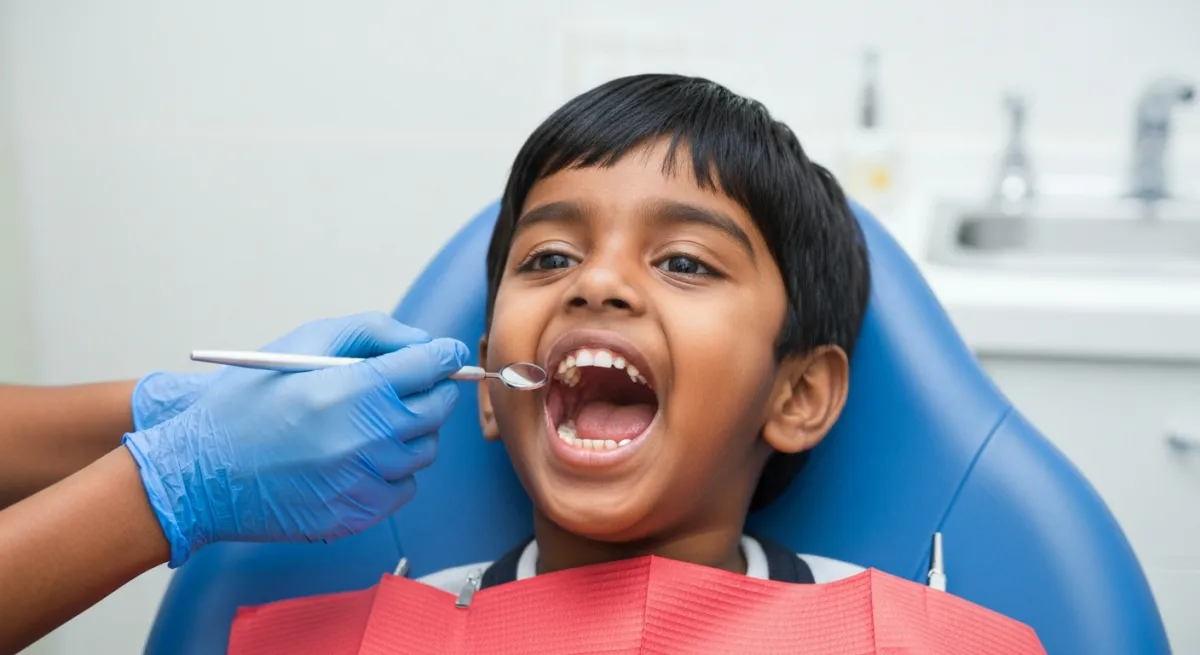
Start visits early — the earlier children begin, the less anxious they will be. Use positive language: say "tooth tickling" instead of "drilling." Never use dental visits as a threat or punishment. Let your child bring a comfort toy, and praise them after the visit. At Samhita Dental, the team is trained to handle children with patience, distraction techniques, and a comforting environment.
When to See an Orthodontist
The first orthodontic evaluation is recommended by age 7. Early signs your child may need orthodontic treatment include crowded or crooked teeth, difficulty biting or chewing, mouth breathing, teeth that do not meet properly, early or late loss of baby teeth, and thumb sucking past age 4. Early intervention can guide jaw growth and prevent complex treatment later. At Samhita Dental, orthodontic evaluation, braces, and clear aligners are all available under one roof.